

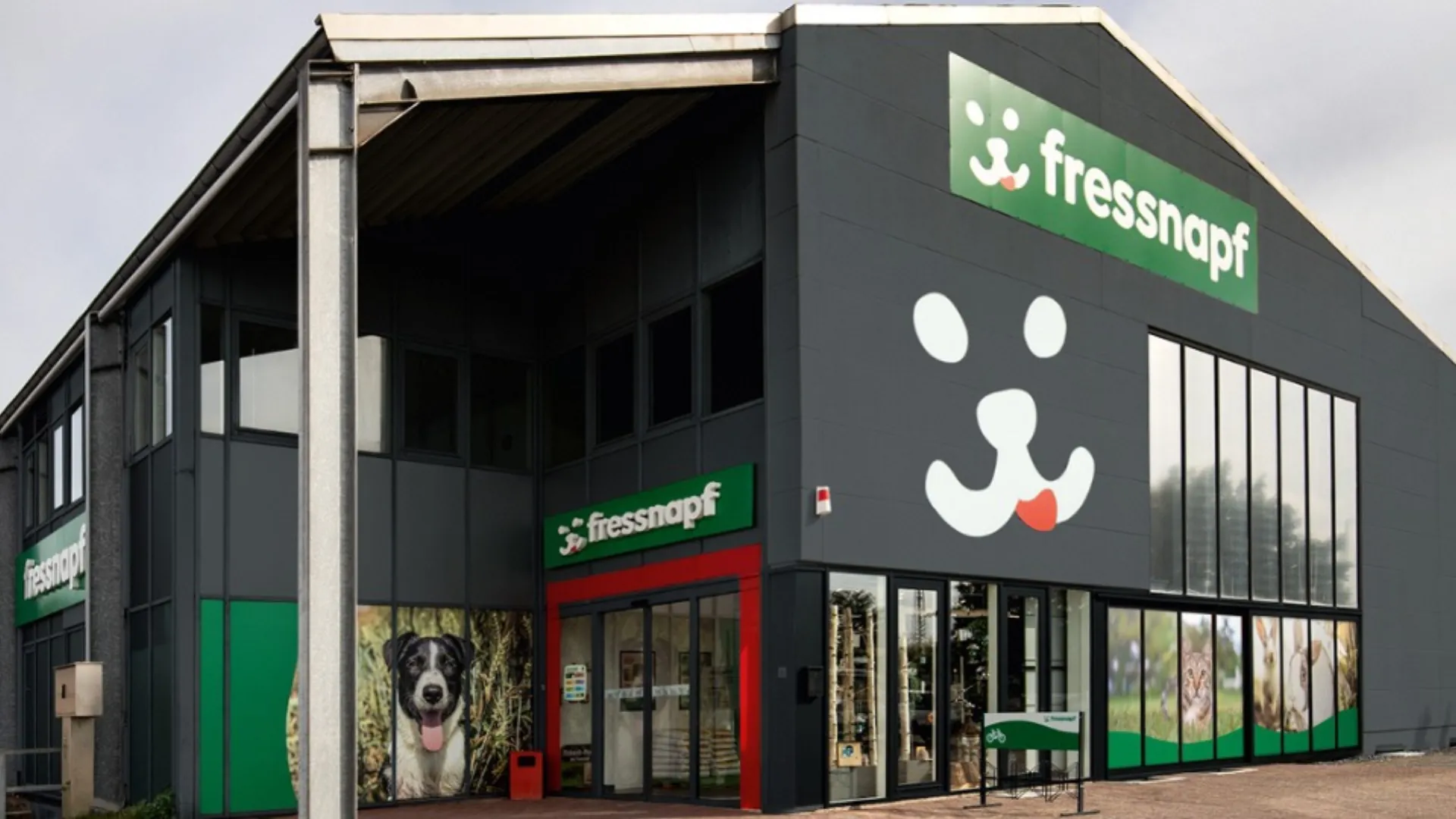
ANWR Group: High-Performance for Millions of Product SKUs
5M+
Product SKUs managed centrally
80%
Faster product data sync

One customer profile across every touchpoint — commerce, service, marketing, and ERP. We build the data model and the ingestion pipelines so you actually trust what you see.
CRM, commerce, service, marketing, and ERP data merged into a single record. One customer, one view — regardless of how many systems touch them.
Enriched profiles pushed to marketing, sales, and service tools in milliseconds. Personalisation that responds to what customers just did.
Link anonymous browse sessions to known accounts. Build complete journeys — not fragmented snapshots.
Dynamic audiences updated automatically from live data. Marketers and analysts build segments without engineering support.
Consent signals captured, stored, and enforced across every connected system. GDPR compliance that doesn't rely on manual processes.
Deduplication, validation, and enrichment as data arrives. Garbage in, garbage out — we prevent the garbage.
A Customer Data Platform is only valuable if the data inside it is trustworthy. Most CDP projects fail at the data layer — poor source mapping, inconsistent identifiers, incomplete consent capture. We have seen the wreckage across DACH and Southern Europe. We have fixed it.
Every Spadoom CDP project starts with a data audit. We sit with your engineering and marketing teams and map every customer touchpoint: what data it generates, how it is structured, where identifiers exist, and what needs transforming before ingestion. We document gaps. We flag consent blind spots. Only then do we configure the platform.
This approach is slower up front and significantly faster overall. It eliminates the rework cycles that plague CDP rollouts where teams skip the audit and start connecting sources on day one.
As an SAP Gold Partner with offices in Zurich, Bolzano, Vienna, and Tallinn, we deliver CDP projects across the DACH region, Italy, and broader Europe. Our delivery follows the SAP Activate methodology across five phases — discovery, preparation, exploration, realisation, and deployment — adapted specifically for CDP scope and complexity.
We are not a platform reseller. We build the data model, the ingestion pipelines, the identity rules, and the activation flows. Then we train your team to run it.
CDP projects should pay for themselves. If yours does not, something went wrong in scoping or execution. Here is what we see across our client base:
Want to model the numbers for your business? Use our ROI calculator to estimate the impact before the project starts.
SAP Customer Data Platform is the connective tissue of the SAP CX suite. When it is properly implemented, every connected product gets better.
SAP Emarsys receives richer segmentation data. Campaigns target audiences built from unified profiles, not siloed email lists. Suppression works because Emarsys knows what happened in commerce and service, not just in past email sends. Read more in our deep dive on Emarsys and CDP integration.
SAP Sales Cloud V2 agents see customer lifetime value, recent support tickets, and marketing engagement alongside pipeline opportunities. They walk into calls with context instead of guessing.
SAP Service Cloud V2 agents see a customer’s full purchase history, loyalty tier, open marketing offers, and past interactions — in one screen. Resolution times drop because agents stop asking customers to repeat themselves.
SAP Commerce Cloud uses CDP segments for on-site personalisation. Product recommendations, pricing rules, and content blocks respond to the unified profile, not just the current session cookie.
SAP Customer Identity (CIAM) provides the authentication and consent layer that feeds CDP. Registration events, consent updates, and preference changes flow into CDP in real time. For detail on how these two systems divide responsibility, read our CDP vs CDC comparison.
SAP Loyalty Management shares points balances, tier status, and reward redemptions with CDP. This data enriches profiles and enables loyalty-aware segmentation across all channels.
If you are running multiple SAP CX products, a CDP implementation multiplies the value of each one. If you are only on one product today, CDP is the foundation that makes the next one fast to deploy.
Identity resolution is the hardest part of a CDP implementation. It is also the part that delivers the most value. Get it wrong and your unified profiles are fiction. Get it right and every downstream system benefits.
SAP CDP supports two approaches:
Deterministic matching links records that share an exact identifier — email address, phone number, loyalty ID, CRM account number. This produces high-confidence merges. It is the backbone of identity resolution and handles 60–80% of matches in most deployments.
Probabilistic matching fills the gaps. It uses behavioural signals, device fingerprints, and fuzzy attribute matching to link records that likely belong to the same person. Confidence scores determine whether a merge happens automatically or gets flagged for review.
Spadoom configures merge policies that define which source wins when two records conflict. Your CRM says the customer is in Zurich; your commerce platform says Basel. Merge policies resolve this based on source trustworthiness and recency, not random chance.
The practical impact: clients typically see a 20–40% reduction in duplicate profiles after identity resolution is live. That means fewer wasted marketing impressions, more accurate lifetime value calculations, and service agents who see the real history.
Batch data loads are necessary but not sufficient. The highest-value CDP use cases depend on real-time event processing.
SAP CDP ingests streaming events — page views, cart additions, form submissions, service interactions, app events — and updates the unified profile within seconds. This powers three categories of use case:
Cart abandonment and browse recovery. A customer adds a product to their cart on your commerce site and leaves. Within seconds, CDP updates the profile and pushes the event to Emarsys. The abandonment email fires while the intent is still warm — not 24 hours later from a batch sync.
Real-time lead scoring. A prospect visits your pricing page, downloads a whitepaper, and opens a recent email. Each event updates the lead score in CDP. When the score crosses a threshold, CDP pushes the enriched profile to Sales Cloud V2 as a hot lead. The sales rep sees it in their queue within minutes.
Service context enrichment. A customer contacts support after placing an order and browsing the returns page. The CDP profile — updated in real time — tells the Service Cloud V2 agent what happened before the customer explains. Resolution is faster. The customer feels understood.
Spadoom configures the event pipeline architecture during the discovery phase. We define which events matter, how they map to the data model, and what activation rules trigger downstream actions.
Many of our clients have customer data spread across non-SAP systems. SAP CDP handles these through standard API ingestion, pre-built connectors, and streaming integrations.
Salesforce CRM. Accounts, contacts, opportunities, and activities sync into CDP via API connectors. We map Salesforce fields to the CDP data model and configure bidirectional sync where needed.
Shopify and other commerce platforms. Orders, customer records, and browsing events flow into CDP. This is common for clients running SAP for B2B and Shopify for B2C — CDP unifies the customer across both.
Custom APIs and mobile apps. Any system with a REST or webhook endpoint can push events to CDP. Mobile app SDKs capture in-app behaviour — screen views, feature usage, in-app purchases — and stream it to the unified profile.
Data lakes and warehouses. BigQuery, Snowflake, Azure Synapse, Amazon Redshift — CDP ingests batch exports from any of these. This handles historical data loads and periodic enrichment from analytics systems.
We scope every non-SAP integration as part of the project plan. Data format mapping, authentication, rate limits, error handling, and monitoring are all defined before development starts. There are no surprises at go-live about what can and cannot be connected.
Connecting non-SAP sources raises a follow-up question: does this data belong in CDP or CDC? Our guide to SAP CDP vs CDC helps you draw that line before the project starts.
A CDP is not a standalone product. Its value compounds with every system connected to it.
One data source in CDP gives you a clean profile store. Two sources give you identity resolution. Three sources give you segments that actually reflect customer behaviour. Four or more sources give you a single customer view that no individual system can produce on its own.
This compounding effect is why we treat CDP as infrastructure, not as an application. It sits between your operational systems and your activation channels. It does not replace your CRM, your marketing platform, or your commerce engine. It makes all of them better by feeding them unified, consent-compliant, real-time customer data.
The practical implication for project planning: CDP value scales with the number of connected sources. Start with your two or three highest-value sources — typically CRM, commerce, and marketing. Prove the ROI. Then expand. Each additional source is faster to connect because the data model and identity rules already exist.
For a detailed look at how CDP fits into the broader SAP CX architecture, read our SAP CDP deep dive.
At six months post-go-live, a well-implemented CDP deployment shows measurable results across four dimensions:
Data quality. Duplicate profiles are down 20–40%. Consent coverage is above 90% for active customers. Data freshness SLAs are met — real-time events land in under 10 seconds, batch sources sync within their defined windows.
Marketing efficiency. Campaign audience overlap drops because segments are built from unified profiles, not siloed lists. Suppression rules work across channels. Cost-per-acquisition falls because you stop spending on already-converted customers.
Sales and service context. CRM users in Sales Cloud V2 and Service Cloud V2 see the unified profile without switching systems. Agents reference purchase history, marketing engagement, and loyalty status from one screen. Customers stop hearing “Can you tell me your order number again?”
Operational independence. Marketing teams build and activate segments without filing engineering tickets. The time from “we need this audience” to “it’s live in Emarsys” is under an hour. New data source onboarding follows a documented, repeatable process — not a custom project every time.
If your current setup does not deliver these outcomes, the gap is either in your data architecture or your implementation approach. Wondering whether a CDP belongs in your roadmap now or later? Our planning guide lays out the decision framework we use with clients. Or estimate the financial impact before the project starts.

SAP CDP is a real-time customer data platform that unifies profiles from commerce, service, marketing, and ERP data sources. It resolves identities across anonymous and known touchpoints, builds 360-degree customer profiles, and activates segments across SAP CX tools like Sales Cloud, Service Cloud, and Emarsys — and via APIs to third-party tools.
A CRM like SAP Sales Cloud V2 manages sales interactions and pipeline — it's organised around accounts and opportunities. SAP CDP manages unified customer identity and behaviour at scale — designed for millions of profiles, real-time event streaming, and feeding activation across marketing, service, and commerce. The two complement each other: CDP feeds enriched profiles into the CRM.
You need a CDP when you have customer data spread across more than two systems with no single source of truth. Signals: marketing and service see different customer histories, you can't suppress contacted customers across channels, or personalisation is blocked by disconnected data. If you have one system with clean data, a CDP is overkill.
No. SAP CDP integrates with any data source via APIs, pre-built connectors, or streaming ingestion. SAP Commerce Cloud is a common source, but SAP CDP also connects to Salesforce, Shopify, custom APIs, mobile SDKs, and data lakes. Spadoom builds the ingestion architecture as part of every CDP project — regardless of your existing stack.
It depends on the scope. A focused deployment connecting two or three data sources with standard connectors can go live in 8 to 12 weeks. Larger programmes that involve complex identity resolution, custom ingestion pipelines, and multiple activation channels typically run 4 to 6 months. The biggest variable is data readiness — clean, well-documented sources accelerate every phase.
SAP CDP and SAP Customer Data Cloud (CDC) solve different problems. CDC handles customer identity and access management (CIAM) — registration, login, authentication, consent capture, and preference management. CDP takes the profiles and consent signals from CDC and combines them with behavioural, transactional, and third-party data to build unified profiles for activation. Think of CDC as the front door (who is this person, and what did they consent to?) and CDP as the engine room (merge all their data, build segments, push to channels). Most enterprises need both.
Yes. SAP CDP supports event-driven streaming ingestion alongside batch loads. Real-time events — page views, cart actions, service interactions — update the unified profile within seconds. This powers use cases like cart abandonment triggers, real-time lead scoring, and in-session personalisation. Spadoom configures the event pipeline architecture during the discovery phase.
Our Customer Data Platform (CDP) team has done this before — across manufacturing, retail, and financial services. Let's talk about what's realistic for your situation.
Request a ProposalTrusted by leading European companies










Leave your details and we'll schedule a personalised SAP Sales Cloud V2 & Service Cloud V2 demo for your team.
Your message has been received. We'll be in touch shortly.
Something went wrong. Please try again or email info@spadoom.com.