
AXA: From a Rigid On-Premise World to the Agile Azure Cloud
0%
Downtime during migration
-40%
Lower operating costs

Customer service that doesn't require three escalations to get an answer. Built on SAP Service Cloud V2 — configured by people who've run the implementation from kickoff to hypercare.
Handle requests from email, phone, chat, and portal in a single agent workspace. No more switching between systems to get context.
Intelligent suggestions help agents resolve issues faster and more consistently — especially useful for complex B2B service scenarios.
Customers can log tickets, track status, and find answers themselves. Reduces inbound volume and improves satisfaction.
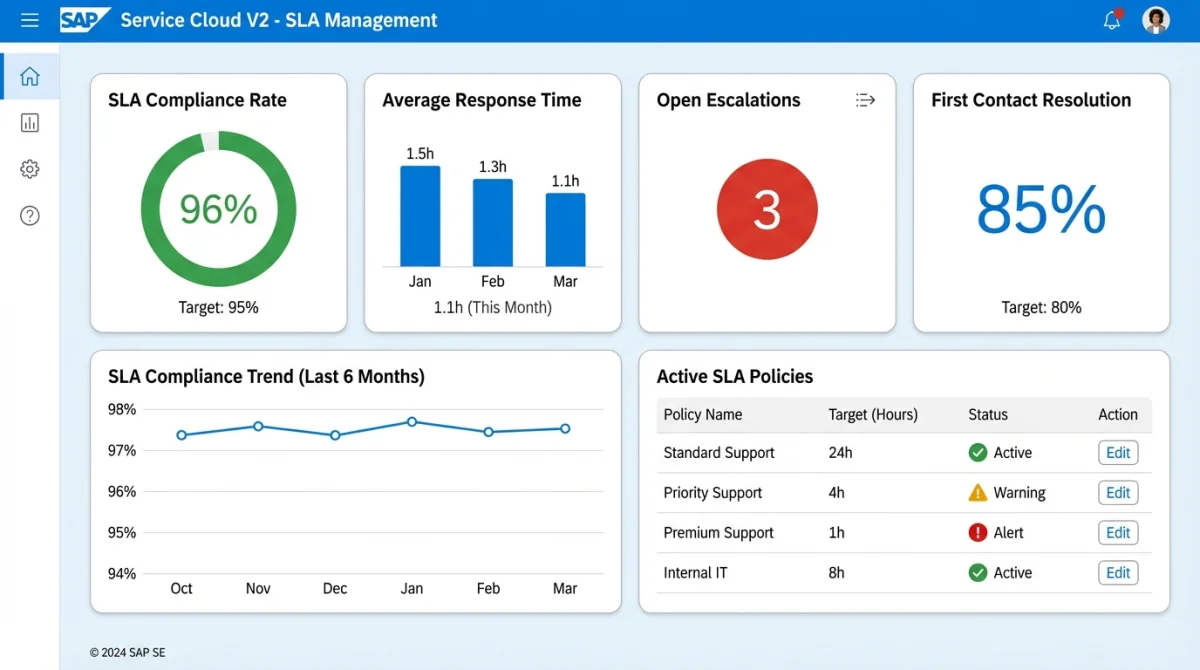
Define and enforce service levels per customer segment, product line, or contract. Escalations happen automatically when needed.
Structured repository for troubleshooting guides and product docs — searchable by agents and customers alike.
Escalate tickets directly to on-site technicians via SAP FSM, with full case context preserved. No re-keying.
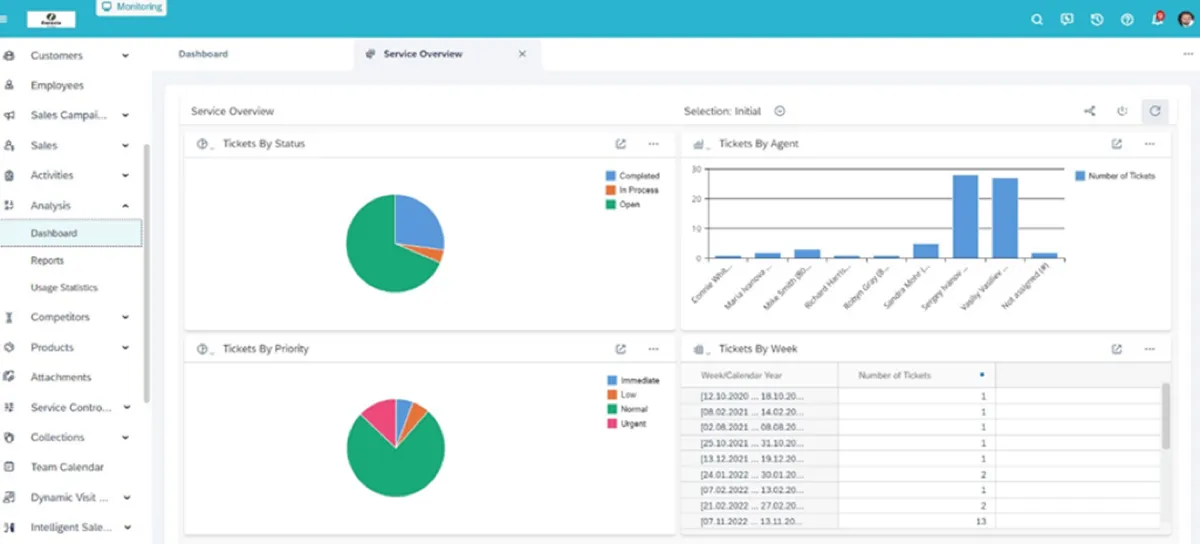
B2B service organisations have it harder than B2C. Contracts vary per customer. Products are complex. Technicians are expensive. Escalations carry real financial risk. We’ve implemented SAP Service Cloud V2 for manufacturers, pharmaceutical companies, and utilities across Switzerland, Germany, Austria, and Italy — where getting it wrong means broken SLAs and unhappy enterprise customers.
As an SAP Gold Partner based in the DACH region, we bring local presence and hands-on project delivery. No offshore handoffs. Our team has run Service Cloud V2 projects from first workshop to hypercare — omnichannel configuration, SLA rule engines, CTI integration, ERP connectivity, and end-user training that gets agents productive in week one.
Our implementations go deep on contract-based service, integration with ERP for warranty and asset data, and escalation workflows to SAP Field Service Management. We don’t do out-of-the-box deployments; every project is scoped to what your service model actually requires. Delivery follows SAP Activate methodology — five phases from discovery through hypercare — adapted for Service Cloud V2 projects. For a complete platform walkthrough, see our SAP Service Cloud V2 guide.
We also run SAP Service Cloud V2 for our own service desk. The workflows we recommend are the ones we use ourselves every day.
SAP reports that organisations using Service Cloud V2 see concrete operational improvements:
These are not theoretical gains. Our clients in manufacturing and utilities report first-call resolution rates improving within the first quarter, and service managers reclaiming hours previously spent on manual SLA reporting. Calculate your projected ROI based on your team size and ticket volume.
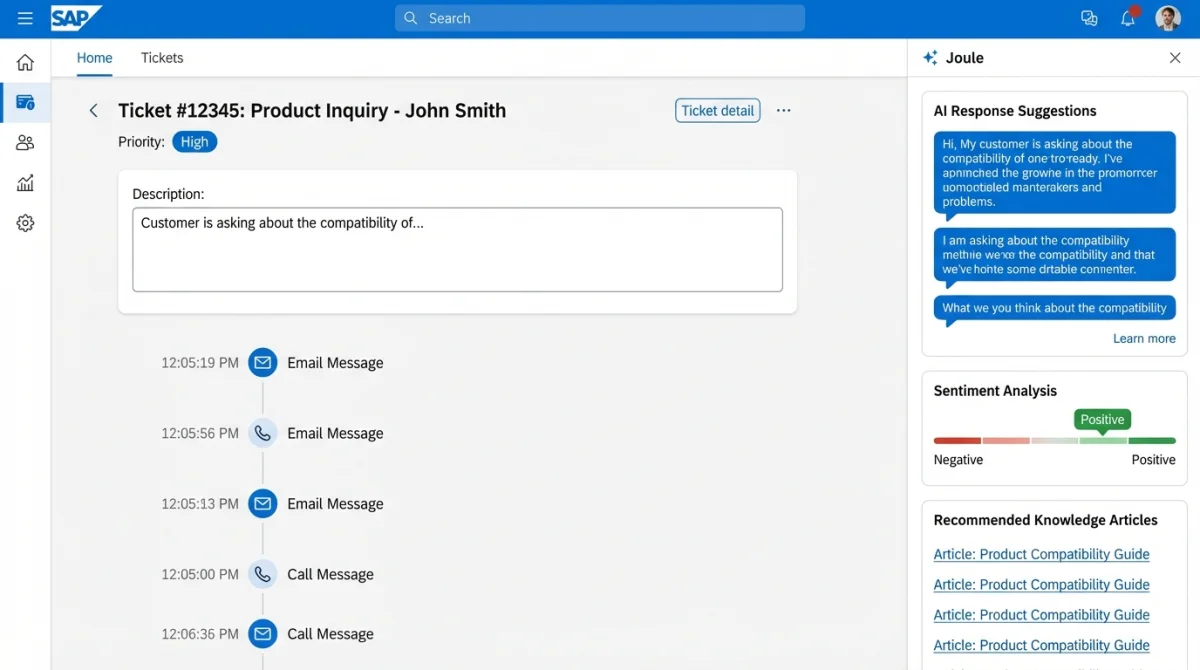
SAP Service Cloud V2 ships with Joule, SAP’s AI assistant, embedded directly into the agent workspace. This is not a bolt-on — Joule runs inside the service console:
With Joule Studio (GA since Q1 2026), you can build custom AI agents for service scenarios — for example, an agent that checks warranty status in S/4HANA and drafts a resolution proposal before a human even opens the case. For the broader picture of AI agents in SAP CX, read what agentic AI means for service and sales teams.
SAP Service Cloud V2 is a ground-up rebuild, not a feature update. V1 entered maintenance mode alongside Sales Cloud V1. SAP’s active investment — including all Joule AI capabilities — is in V2 only.
| Capability | V1 | V2 |
|---|---|---|
| Architecture | Monolithic, customisation via SDK | Composable plug-in extensions — custom logic survives upgrades |
| AI & Joule | Not available | Native: sentiment analysis, intelligent routing, suggested responses, case summaries |
| UX | Classic Fiori-style | Modern, unified agent desktop — all channels in one workspace |
| Updates | Bi-annual, requires upgrade project | Quarterly, zero-downtime deployment |
| Extensibility | Key User Tools, limited | Plug-in framework, Joule Studio agents, SAP Build integration |
| Omnichannel | Channels added via third-party connectors | Native email, phone, chat, portal, and social in one console |
| CTI Integration | Third-party only | Native CTI framework with softphone embedding and screen pop |
| Field Service | Separate integration project | Native escalation to SAP FSM with full case context |
If you’re evaluating the migration from V1 or from on-premise SAP CRM Service, read our C4C to V2 migration guide for a step-by-step process. The architectural shift affects not just features but how you extend and maintain the platform long-term.
The market is noticing the rebuild. In the 2025 Gartner Magic Quadrant for CRM Customer Engagement Centers, SAP moved from Niche Player to sole Challenger — the only vendor to change quadrant position that year. That reflects the pace of V2 development: quarterly releases, native AI, and composable architecture that analysts can now evaluate against Salesforce and ServiceNow.
On G2 (based on verified user reviews, 2025):
| Category | SAP Service Cloud | Salesforce Service Cloud |
|---|---|---|
| Ease of Use | 8.7 | 8.4 |
| Quality of Support | 8.8 | 8.3 |
| AI Text Generation | 9.3 | 8.0 |
| Meets Requirements | 8.8 | 8.6 |
SAP scores higher on every dimension except review volume (219 vs 6,640 reviews). For organisations already running SAP ERP, these scores matter — the integration advantage compounds the UX advantage. For head-to-head comparisons, see our SAP Service Cloud V2 vs Salesforce and vs Zendesk pages.
SAP Service Cloud V2 typically costs between $60 and $80 per user per month, depending on volume and contract terms. Compare that to the main alternatives:
When you factor in the native S/4HANA integration — no middleware licenses, no third-party connector subscriptions — the total cost gap widens further in SAP’s favour. The total cost of ownership depends on your agent count, number of channels, integration scope, and SLA complexity.
Spadoom offers fixed-price implementation packages so you know the full investment before signing. For SMEs looking to get started quickly, see our CRM in 10 Days package — it covers both Sales Cloud and Service Cloud V2 deployment.
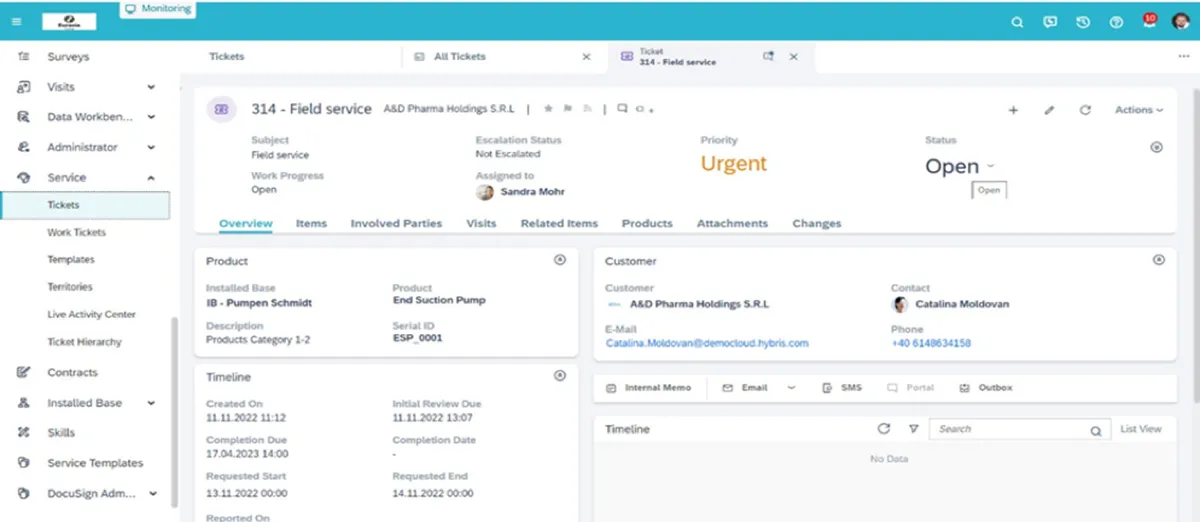
SAP Service Cloud V2 is built for B2B complexity. Here’s how we’ve deployed it across industries in Switzerland, Germany, Austria, and Italy:
Pharmaceutical and medical devices — Regulated service environments where every interaction must be traceable. We configure case documentation workflows that satisfy audit trail requirements, warranty tracking linked to serial numbers in SAP ERP, and compliance-aware escalation rules. Agents see device history, batch numbers, and recall status without leaving the service console.
Utilities — SLA enforcement is non-negotiable. We set up multi-tier SLA structures tied to customer contracts, automated escalation chains when response windows are at risk, and field dispatch integration for on-site technician scheduling via SAP FSM. Real-time dashboards give operations managers visibility into SLA performance across regions.
Manufacturing — Spare parts ordering, warranty claims, and return authorisation workflows that connect directly to S/4HANA. Agents can check part availability, create service orders, and trigger logistics processes from the case — no switching to ERP. We configure product-based routing so cases land with the team that knows the equipment.
Professional services — Contract-based SLA management where service levels vary by client, engagement tier, and geography. We integrate Service Cloud V2 with project management in S/4HANA so that service cases linked to active engagements are visible to both the service desk and the project team.
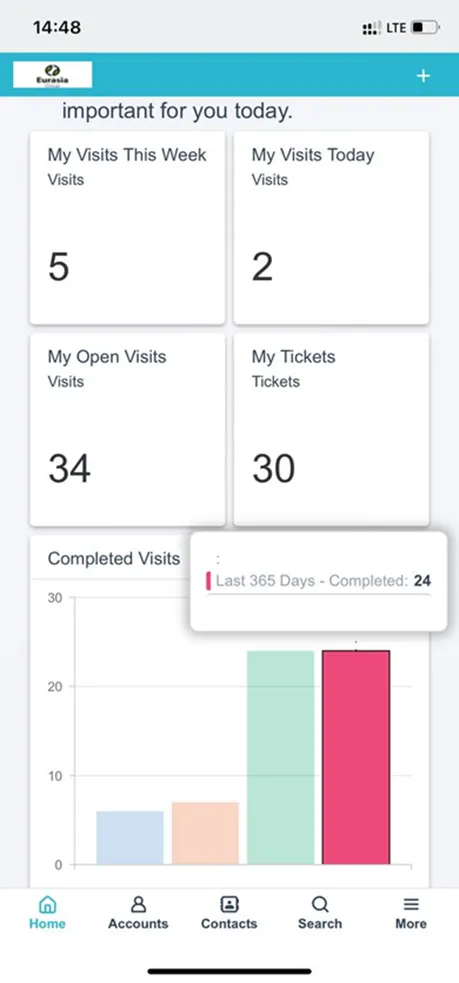
SAP Service Cloud V2 becomes significantly more powerful when it’s connected to the right systems. Agents need to see order history from ERP. They need to know if the product is under warranty. They need to dispatch technicians without re-entering information.
We handle these integrations as standard — not as an optional add-on. If you’re on S/4HANA, SAP ECC, or SAP Commerce Cloud, the connectors are well-trodden ground. Pre-built integration covers:
For non-SAP systems, we scope the integration as part of the project. Most B2B service teams also need CTI (computer-telephony integration) for screen pops and call logging — Service Cloud V2’s native CTI framework handles this without third-party middleware.
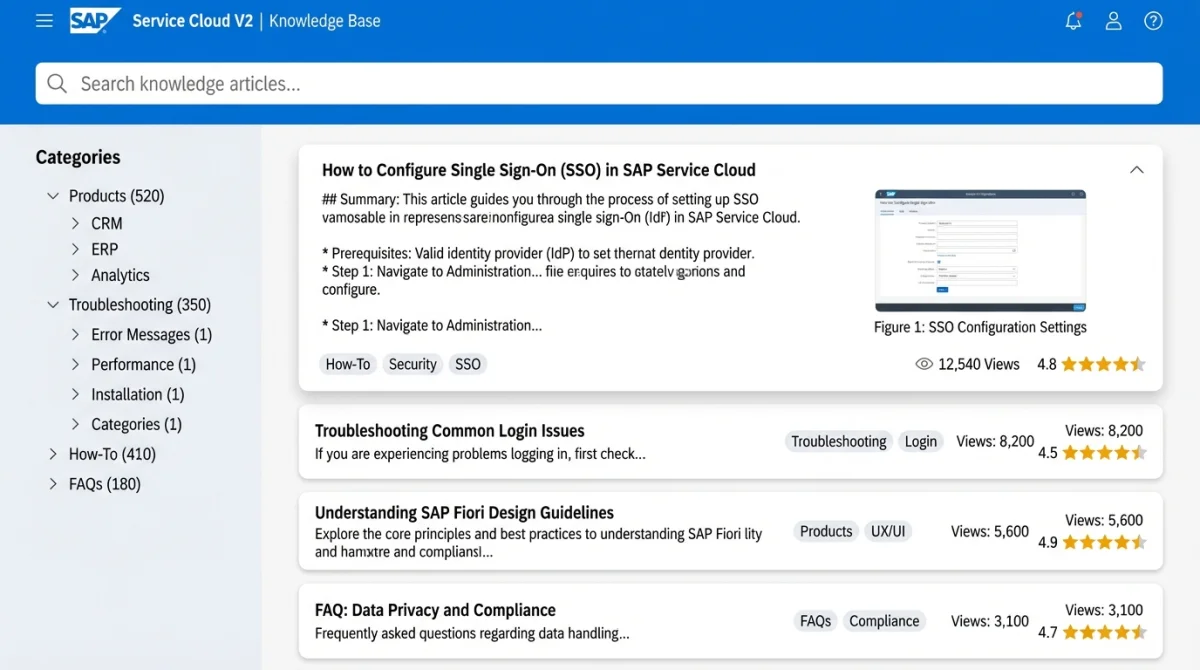
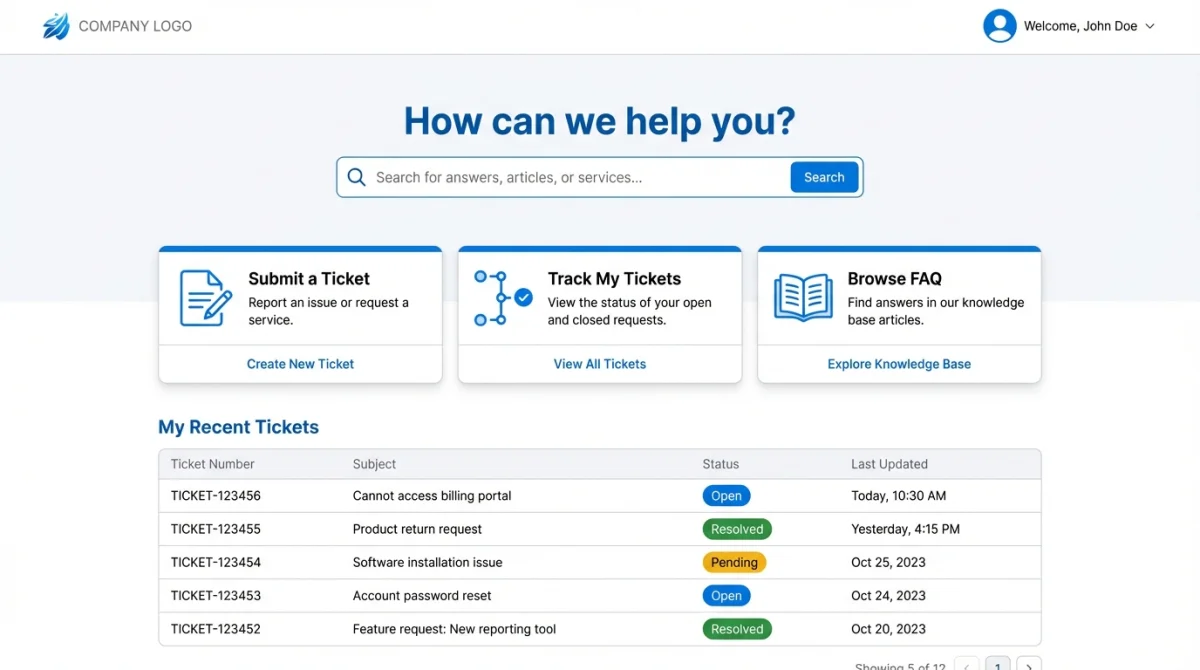
Six weeks after go-live, your service desk should:
Six months after go-live, you should see measurable improvement in first-call resolution rates, SLA compliance, and agent satisfaction scores. We track these metrics post-go-live and hold ourselves accountable for the outcomes — not just the deployment.

SAP Service Cloud V2 is SAP's cloud-native customer service platform for B2B organisations. It delivers omnichannel case management across email, phone, chat, and portal; AI-assisted resolution; SLA enforcement; a customer self-service portal; and integration with SAP ERP and SAP Field Service Management. Like Sales Cloud V2, it is a ground-up rebuild with composable architecture and quarterly releases.
SAP Service Cloud V2 is a modern cloud-native platform, not an evolution of SAP CRM Service. It offers composable architecture (custom logic survives upgrades), native AI (intelligent routing, suggested responses, sentiment analysis), a unified agent desktop for all channels, and real-time event processing. Unlike on-premise SAP CRM, it receives quarterly releases without migration projects.
Yes. SAP Service Cloud V2 has pre-built connectors for SAP S/4HANA and SAP ECC, giving agents live access to order history, warranty status, and asset data during service interactions. Spadoom handles these integrations as standard — not as an optional add-on.
SAP Service Cloud V2 is widely deployed in pharmaceutical and medical device companies, utilities, manufacturing, and B2B professional services — wherever complex SLA commitments, field technician escalations, and contract-based service models are the norm. It is particularly strong in regulated industries that require audit trails and compliance documentation. Spadoom has implemented Service Cloud V2 for clients across Switzerland, Germany, Austria, and Italy.
A typical SAP Service Cloud V2 implementation with omnichannel configuration, ERP integration, and SLA setup takes 10–16 weeks. Smaller scopes — for example, a single-channel rollout with standard workflows — can go live in as few as 8 weeks. Enterprise deployments with complex escalation rules, Field Service Management integration, and multi-country SLA structures usually run 4–6 months. Spadoom scopes every project individually based on the service model, number of channels, and integration landscape.
SAP Service Cloud V2 typically costs between $60 and $80 per user per month, depending on volume and contract terms. That is significantly less than Salesforce Service Cloud ($25–$500/user/month across tiers) or Zendesk Suite ($55–$115/agent/month). Total cost of ownership also depends on integration scope (SAP ERP, CTI, Field Service) and implementation complexity. Spadoom offers fixed-price implementation packages so you know the full investment upfront. Contact us for a tailored estimate.
In the 2025 Gartner Magic Quadrant for CRM Customer Engagement Centers, SAP moved from Niche Player to sole Challenger — the only vendor to change quadrant position that year. On G2, SAP Service Cloud scores 8.7 for ease of use (vs Salesforce's 8.4), 9.3 for AI text generation (vs 8.0), and 8.8 for quality of support (vs 8.3). These independent evaluations reflect the rapid maturity of V2's architecture, AI capabilities, and user experience.
Our Service team has done this before — across manufacturing, retail, and financial services. Let's talk about what's realistic for your situation.
Request a ProposalTrusted by leading European companies











Leave your details and we'll schedule a personalised SAP Sales Cloud V2 & Service Cloud V2 demo for your team.
Your message has been received. We'll be in touch shortly.
Something went wrong. Please try again or email info@spadoom.com.